
♭ ♮ ♯
AFTER THE SS QUIZ BECAUSE TIME IS A VALUABLE THINGJohn William's Tips and Tricks for Being John Williams
I have found a cool and froody New York Times interview with John Williams, also known as the composer John Williams, who writes pieces for films under the name of John Williams. (I reference him so much I probably give off the impression that I'm trying to become just as good as John Williams, but that's impossible. Lower your standards a bit right now while I still have time.)
Anyway, the interviewer was asking our man John Williams (take a shot every time I say John Williams) how he gets inspiration, how he works, blah blah blah.

(1) Write something musical every day, good or bad. Okay, John. Just. That's cool. I mean. Now I have to attempt that. THANKS, John.
(2) Work in the morning, never at night. Imma have to stop you there, John. Obviously you're not a suffering student. Did I ever tell you about the time we had a snow day and I came downstairs the time school normally ENDS? No, of course not. I've never met you in my life. My bad, John.
(3) There is no such thing as a writer's block in music. That's IT, I have HAD IT with you, JOHN. No such thing??? Writer's block??? Well, eXPLAIN THIS:
 |
| 100% photo of me, writing |

(4) Uh, DON'T listen to that much music for inspiration. Well, his rationale is that music BETTER than his is not encouraging and music WORSE than his will distract him and force him to pick out the issues. I think this is more of a personal thing, and since I'm a complete amateur, I wouldn't be that offended to hear music better than mine (which is already every song, ever™). I'm also not well-versed enough to criticize any music. So...imma just casually ignore that piece of advice. Or, I'll follow that advice and ignore YOU, John, because you ARE one of my musical inspirations.
BONUS:
So as a sort of tribute to John Williams and being my ~Daily Musical Thing~, here's my mashup of "Hedwig's Theme" from Harry Potter with "Greensleeves", which works really well.
McKinley, James C., Jr. "John Williams Lets His Muses Carry Him Along." The New York Times. The New York Times, 19 Aug. 2011. Web. 16 Feb. 2017.
♭ ♮ ♯
ON SATURDAY DURING A SPUR OF PRODUCTIVITY
Making Lyrics Lyrical
Ah, lyrics. The one part of writing a song I feel a bit more confident about. The one aspect I don't really suck at -

Okay, never mind. It turns out I actually can't do anything correctly and I should just stop.
(I'm kidding, I gotta go through with this now.)
Well, that bit of advice just lowkey denounced every pop star on the radio right now. That sure sucks.
I found a variety of sources, a good deal of them just Common People, by which I mean people who don't have a Ph.D in Songwriting (is that even a thing?). I'm not too concerned about that, even though that would get me a 0 for an Annotated Bibliography (which we're not doing HALLELUJAH), because I feel that music isn't 100% theory or science. A good deal is just audience response, and what's better than the Literal Audience giving feedback on what type of lyrics they like and don't like? These are the people you're trying to appease, anyway. But I did manage to find an interview with Stephen Schwartz, who, y'know, wrote Wicked, no big deal.
 |
| i apologize for this |
Basically, it really depends. Everything depends. Nothing is certain. Music is an illusion.
But for real, it doesn't really matter whether you write the lyrics or the instrumental first, because success has come both ways.
Additionally, writing lyrics is really just writing a poem (omg what). I've had at least 2 people in the past say my poetry doesn't suck, and I genuinely enjoy writing in that style. Frankly, this was the part of the project I looked forward to in the most. The Book Thief in itself is such a poetic book!
Like Mr. Perlman has told us at least once, show, don't tell.
That's the most important tip about writing lyrics. Then, the collection of sources collectively say:
(1) Tell a story.
(2) Buy a....rhyming dictionary (or, welcome to the Internet)
(3) Start with a title.
(4) Establish a time and location to be cool.
(5) Add details.
(6) Establish brand names to be cooler.
(7) Action.
(8) Imagery.
(9) Extended metaphors are beautiful.
(10) Irony is ideal.
(11) Have a point.
(12) Don't forget that grammar is a thing.
 |
| millennials love proper grammar |
Now, before I read all these articles, I decided to just see where my abilities lie by writing a song parody to "7 Years" by Lukas Graham. It can be found on the About Me page. I already knew it was 180% trash, but let's just judge it according to the aforementioned guidelines I gathered from my resources.
(1) Tell a story. Check.
(2) Buy a....rhyming dictionary No, I refuse. But I did use the Internet.
(3) Start with a title. Technically, I did.
(4) Establish a time and location to be cool. Alas. No, I did not.
(5) Add details. I'm not sure if I had enough, but there was at least one (1).
(6) Establish brand names to be cooler. Whoops.
(7) Action. Probably not enough.
(8) Imagery. Okay, definitely not enough.
(9) Extended metaphors are beautiful. My lyrics were not beautiful.
(10) Irony is ideal. My lyrics were not ideal.
(11) Have a point. I mean...I just kind of...it was like...an introduction to myself??
(12) Don't forget that grammar is a thing. Luckily, I did not forget grammar was a thing.
Obviously, there's room for improvement. Welp.
"Stephen Schwartz on Writing Music and Lyrics for Musicals." MusicalWriters.com. Scene 1 Arts LLC, n.d. Web. 18 Feb. 2017.
Sources:
Blume, Jason. "Show—Don’t Tell: 3 Steps to Writing Better Lyrics." BMI.com. Broadcast Music, Inc., 23 Mar. 2015. Web. 18 Feb. 2017.
Schindler, David. "How Anyone Can Write Better Lyrics." The Muse's Muse. The Muse's Muse Songwriting Resource, 1996. Web. 18 Feb. 2017.
♭ ♮ ♯
SUNDAY NIGHT AFTER A MOMENT OF PANIC
Being an Emotional Wreck
Hey, so thanks to Pope Gregory XIII's calendar, the first week ends?
T o d a y ? ?
(Maybe I'm incorrect and this week ends when the cycle ends, but a little panic never hurt nobody.)
Well, all I can say is THANK GOD I left myself about an entire week of overflow time, just in case something like this would happen. Because I'm?? Already behind? Wow, I sure am ama-Zhang.

Being an Emotional Wreck
Hey, so thanks to Pope Gregory XIII's calendar, the first week ends?
T o d a y ? ?
(Maybe I'm incorrect and this week ends when the cycle ends, but a little panic never hurt nobody.)
Well, all I can say is THANK GOD I left myself about an entire week of overflow time, just in case something like this would happen. Because I'm?? Already behind? Wow, I sure am ama-Zhang.

Alright. So, anyway, I focused a bit more on emotions in my research today.

I watched this really great video.
Aside from the odd capitalization choices, it was amazing and extremely informative!
I took some quality notes, and now I'll just sum up some main points like I always do.
First, it is time to throw all (okay, some) of the concepts of "minor=sad" and "major=happy" out the window.
(That's right, Christmas Tree Group. I never forget.)
(Please don't hurt me, I love all of you.)
Okay, so it's easy to prove that idea is prevalent in...everything, so what on Earth am I talking about? Well, sure, if you only listen to WESTERN MUSIC.
 The video gave an example of a Zuni lullaby, which doesn't sound anything like Brahms' lullaby or any previous notions we have about a lullaby. So, basically, you can't trust your audience to just understand that major=happy and minor=sad, because it's not actually built into the human condition. Which is why a lot of film music can be minor but be played over a happy scene. Or vice versa, such as in that-super-sad-series-of-montages-in-Up-you-know-what-I'm-talking-about.
The true key to winning over your audience and making them cry is NOT to play sad music over a sad scene, but to have
Play happy music over a sad scene. Or the other way around. And this can be done by developing a
 Wow. I bet you haven't heard that before.
A theme in music is basically a really recognizable melody, used by filmwriters to be played at strategic points in the film to induce emotion. Famous ones are Hedwig's Theme and Ellie's Theme, which is the name of that lovely repeated melody in Up. Now, let's look at Monsters Inc.
 So, there's this melody being played when Sully first reassures Boo not to be afraid of him. Then, later on when he accidentally scares her, the same theme is played. And this is sad, because the theme is representing Sully and Boo's relationship. Now, Sully has to repair it. The theme is also played when Sully thinks he's never gonna see Boo again. And then it's played at the end when Sully DOES see Boo again. The theme evokes memories of their relationship, and makes us all cry a little bit inside.
Alright, now let's talk about Up, the movie that literally never fails to make me cry. (I'm a weak man; do not hurt me.)
 The composer of the soundtrack, one Michael Giacchino, said some really insightful things. To start, he first tries to "sum up all the emotions and feelings into one chord." For Up, that chord was an Fmaj7.
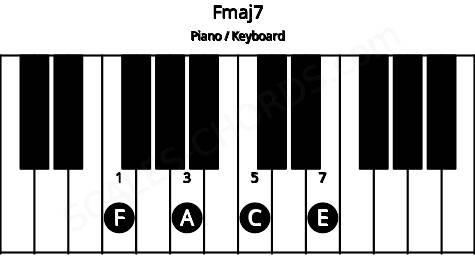 The notes are FACE. Yep. FACE. I didn't even realize until now.
That chord seems to f u s e an F major chord and a C major chord into something that has a tinge of sadness. And yet, it's undoubtedly major. (Major=happy WHOM?)
And now that he has his main chord, he just composes around that. The theme is called Ellie's Theme and it represents her sense of adventure.
That's why it was so prevalent during the "Married Life" scene(s), and then it kinda disappears when she.......dies.
BuT THEN bUT tHEn it comes back later, once when Carl is about to leave his house but then he finds The Adventure Book, once when he's about to give up because Paradise Falls is not what it seems,
and then lastly when he gives Russell his badge. These are all important because they're reminding all of us that Ellie never truly left, and her spirit is pushing Carl forward. The last scene is especially interesting because the badge ceremony is a HAPPY occasion, so why are we all dying a little? Because the theme is being played and we're being reminded of everything else that happened to get to this point. And this is how Pixar toys with our feelings.
The same thing happens in Toy Story 3 and Finding Nemo, but I won't bother explaining that.
So, I'm not entirely sure how I'll utilize this new info into my own compositions, especially since I'm not actually writing a soundtrack but ... three (3) songs. And they're all supposed to be pretty different from each other. I'll think about that, but since the three characters are so intertwined with each other, I'll probably have a small melody that's repeated in all three. Like how "Red and Black" from Les Mis has that "on my own" tune (it's three notes) in the middle, and Hamilton is honestly just a mess of repeated melodies. For example, the beginning of "Burn" and the beginning of "Wait For It" have the same chord progression, although "Burn" makes it sharper and minor-er. Thanks, Genius Annotations.
I watched this really great video.
 |
| too soon. |
I took some quality notes, and now I'll just sum up some main points like I always do.
First, it is time to throw all (okay, some) of the concepts of "minor=sad" and "major=happy" out the window.
(That's right, Christmas Tree Group. I never forget.)
(Please don't hurt me, I love all of you.)
Okay, so it's easy to prove that idea is prevalent in...everything, so what on Earth am I talking about? Well, sure, if you only listen to WESTERN MUSIC.
The true key to winning over your audience and making them cry is NOT to play sad music over a sad scene, but to have
Play happy music over a sad scene. Or the other way around. And this can be done by developing a

A theme in music is basically a really recognizable melody, used by filmwriters to be played at strategic points in the film to induce emotion. Famous ones are Hedwig's Theme and Ellie's Theme, which is the name of that lovely repeated melody in Up. Now, let's look at Monsters Inc.

Alright, now let's talk about Up, the movie that literally never fails to make me cry. (I'm a weak man; do not hurt me.)
That chord seems to f u s e an F major chord and a C major chord into something that has a tinge of sadness. And yet, it's undoubtedly major. (Major=happy WHOM?)
And now that he has his main chord, he just composes around that. The theme is called Ellie's Theme and it represents her sense of adventure.
 |
| this movie was beautiful and you can fight me on that |
BuT THEN bUT tHEn it comes back later, once when Carl is about to leave his house but then he finds The Adventure Book, once when he's about to give up because Paradise Falls is not what it seems,
 |
| same, Carl, same |
The same thing happens in Toy Story 3 and Finding Nemo, but I won't bother explaining that.
So, I'm not entirely sure how I'll utilize this new info into my own compositions, especially since I'm not actually writing a soundtrack but ... three (3) songs. And they're all supposed to be pretty different from each other. I'll think about that, but since the three characters are so intertwined with each other, I'll probably have a small melody that's repeated in all three. Like how "Red and Black" from Les Mis has that "on my own" tune (it's three notes) in the middle, and Hamilton is honestly just a mess of repeated melodies. For example, the beginning of "Burn" and the beginning of "Wait For It" have the same chord progression, although "Burn" makes it sharper and minor-er. Thanks, Genius Annotations.
Sources:
Miranda, Lin-Manuel. "Burn." Genius. Genius Media Group, Inc., 25 Sept. 2015. Web. 20 Feb. 2017.
Sideways. "How Pixar uses Music to make you Cry." Online video clip. YouTube, 30 July 2016. Web. 19 February 2017.
Sideways. "How Pixar uses Music to make you Cry." Online video clip. YouTube, 30 July 2016. Web. 19 February 2017.
♭ ♮ ♯
Alright, that was a ride. Well, up until this section, this entire blog post was 2,035 words, so I think I'll just stop here. Obviously my research is not complete, and there's a workday tomorrow, so expect more (in another blog post; you and I are both dying at this point).
See you on the other side of the war~
commented on Amanda's, Jasmine's, Emma's, Olivia's, and Ellie (Z.)'s blogs.
they're all cool kids, go love them!
See you on the other side of the war~
____________________________________________________________________________
commented on Amanda's, Jasmine's, Emma's, Olivia's, and Ellie (Z.)'s blogs.
they're all cool kids, go love them!

Wowza! I'm glad this post had nothing to do with the book thief, because I still haven't read it in a low key way. Also, the reference to Up was a little bit triggering. Just kidding. That was yet another movie I didn't cry during because I have n o s o u l. The idea of a recurring lyric, theme, chord, etc in your songs is definitely a good idea. If you look at some of the best musicals and concept albums you can definitely see things that recur. Chords that keep happening are a good idea. Having one chord that kind of unifies the piece makes the songs still sound different from each other, but at the same time like they belong together. For example, Les Mis has an adoration for the A and C/B chords which is a good time on the guitar. Oops, this is long. Good luck I guess.
ReplyDeleteHey, Good Man! This reply is a bit late. I guess you're easy to forget ;)
DeleteAnyway, it is very true about the chords, and I hope to use Strategic Repetition throughout my songs! I will also make sure to use chords that would kill you if you tried to play them on the guitar, just for you <3
Also, I can't believe you don't cry during Up. I literally teared up on the bus ride to Gettysburg because the bus was playing that movie. Maybe you just need my pillow.