DAY 5 WORKDAY AND THE IDEA OF PRODUCTIVITY
Deutsch.
I've been listening to German 40s music (that's the link to a "playlist") for an hour.
So Germany didn't really have jazz, but there was definitely a heckin ton of swing.
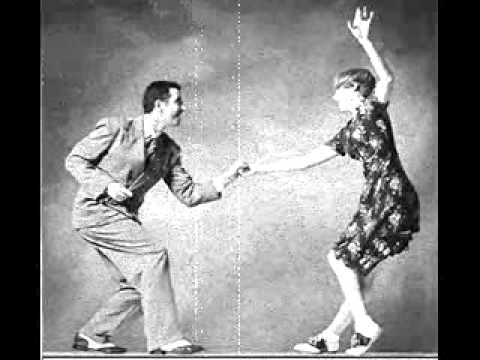
There are also a lot of ballads, not necessarily sad, but I can make them sad. I can write sad ballads. Probably. Hopefully. Ideally.
Well, now I guess I have to decide whether I'm leaning more towards actual German music or John Williams or musical-style. The solution will be to f u s e.
If John Williams wrote Symphonic Suite from Far and Away, and made it sound distinctly Irish, then I can try my very best to make my songs sound somewhat German. Or at least appropriate to the time period. I am having a good time, and not at all crying. I swear.
FRIDAY NIGHT FEATURING GOOD INTENTIONS
Interview W H O M
Today I essentially had two hours of band, because I was obligated to go to the IE (I am still a tad shook from the one time I didn't go and got Scolded because I'm a weak man) and then block day band. This means I had time to talk to Mr. Hood (the Hoodmeister @ Ellie Z.) about my project a bit. He's willing to give any help and advice I want, so I guess I'm gonna schedule an interview with him! Then, because we had 30 minutes of Nothing, he showed me some songs and played me a bit of a piece he had written. He showed me this group called the Tin Hat Trio, whose music he described as "Sounds like it belongs in a movie, but there's no movie." And yeah, that's about as accurate as it gets. Their music is really mysterious, and the one song with lyrics I found was...........creepy and terrifying.
The overall feel I'm getting from their aesthetic and music is Miss Peregrine's Home for Peculiar Children.
Then, Mr. Hood showed me how he easily came up with a sort of rhythm and then wrote an entire song based around that. I mean, he made it look really easy. This just also demonstrates the interesting part of writing music. Michael Giacchino, composer for Up, writes his songs by starting with a chord. It's a personal thing. Also, you just have to wait for inspiration to hit you. That's why John Williams writes something every day, because only by writing more can you expect to be hit with more inspiration. It's literally like writing a story or a poem. You just have to let it flow, and overthinking will Not Help. Which is unfortunate, because if there's anything I'm a Genius™️️ at, it's Overthinking. So maybe this project will also help me in that regard.
THE ENTIRE WEEKEND WENT REALLY FAST SOMEONE STOP IT
Progressive Chord Progressions
My dudes, this article is such a blessing. The author, Ryan Leach, is a Good Man. He's a composer, arranger, and producer. He did technical assistance on Bee Movie, which led me to wondering what the soundtrack for Bee Movie even sounds like. So, uh, if you're interested, here it is.
But back to my man Ryan Leach. Well, I thought this would be a quick article and some quick reading and some quick conclusions, but then there was a link to a previous article he mentioned, so of course I thought "Hey, better go check that out," except then
 I mean, I am willing to bet all of these articles are going to be really interesting, but I Did Not Sign Up For This. Also, should I just read the entire website?? Because there seems to be a lot I should look at.
That's it. Reading (or at least taking notes on) the ENTIRE WEBSITE will be out of the question, because Ryan's not even the only author, and oh my God there is so much. I'll probably read a bunch of these articles just because they all seem so useful, but I think you and I would both rather die than have me write a novel blog post summarizing everything I learn.
Okay, if your project or interests have anything to do with music, take some time of your day to peruse this blog because holy crap it covers nearly everything and I'm so shook.
Let's revise that statement. If your project has anything to do with anything you should come to this website. Except for whatever isn't listed on there, I guess. That's right, my pastel friend.
Okay, back to the articles. There was a lot of listening and different chord progressions, and there wasn't really any scientific reasoning as to why some chords sound sadder than others. With the correct tweaking, a major chord could sound sadder than a minor chord. Basically, what I learned is that there is a lot of experimenting to be done, and just bringing one note up or down can change the entire tone of the chord.
Apparently, non-diatonic chords a third apart are Ideal. "Diatonic" really just means notes relating to a specific scale. So, C major to E minor would be diatonic chords, because they're all using notes from C major. C major to E major would be NON-diatonic, because G# is not part of the C major scale. Non-diatonic chord progressions tend to sound more powerful and more intense, either intensely sad or intensely uplifting. The example the website gave was C major to E♭ minor, which is really dark and ominous. Apparently, this technique is used in the Lord of the Rings score and the Rebel Fanfare in Star Wars!
(If you want to read about the basics of music theory because I really didn't explain, this article I reference later sums it up pretty well.)
Source:
Leach, Ryan. "Film Score Harmony: Chords by Thirds." Music & Audio Envato Tuts+. Envato Pty Ltd, 18 June 2014. Web. 25 Feb. 2017.
DAY 6 WORKDAY AND A LOT OF INTERESTING FINDINGS
The Key to Keys
I spent way too much time on that website, and then I came across this gem.
DAY FIVE WORKDAY AND THE LACK OF PIANOS
No Hand Left Behind
It's pretty standard (and I don't plan on messing with this) that, when playing piano, melody goes with the right hand and harmony/accompaniment goes with the left hand. The Sort-of-Scientific reason for this is because your brain just has the tendency to hear the higher notes better and clearer, because acoustics or something.
Well, I've established a theme and a bit of a melody for my first song, which is about Hans (that will be up in a post soon!), and I am understandably playing that with my right hand. So I guess the left hand is just ... hanging out? Making shadows?
Pfft.
I knew this would be my biggest issue, because I have difficulty going beyond anything than a simple waltz or something the little kids play at piano recitals.
So lo and behold, what does my first source give me?
 I sound cocky and annoying, but I know how to do that. To clarify, that is probably the easiest left hand accompaniment save something in 3/4.
Then, another source essentially gave me chord progressions, which I had already toiled through. I mean, maybe I should have specified...?
Worry not, I got myself some Real Information soon enough at this website:
Basically, don't repeat the same thing over and over again (Alberti Bass or Waltz Rhythm etc.) or else your audience might kill themselves.
So to "mix things up," you can
(1) break the pattern up. So, insert a rest or something in between.
(2) only play part of it. The rest is irrelevant in order to preserve sanity.
(3) move it up or down an octave. That can also change the mood and overall atmosphere!
(4) change to a variation. Well, that brings us to variations, which I'm lazy to explain. Basically, change it, but still make it obvious what it is. Or not obvious. There are some crazy variations. Here's the website to a great variation on an entire song, as opposed to a pattern: https://galaxymusicnotes.com/products/twinkle-little-star-variations-advanced.
(5) literally just stop the pattern. Okay.
Other than those tips, there are some more tangible We-Need-A-Piano-In-The-Gifted-Room type of information that I wouldn't be able to explain well, but you'll be able to hear (hopefully soon!). Worry not, I now know a bit more about what I'm doing!
See you on the other side of the war ~
Source(s):
Day, Holly. "Great Left-Hand Accompaniment Patterns for the Piano or Keyboard."Dummies. John Wiley and Sons, Inc., n.d. Web. 03 Mar. 2017.
Deutsch.
I've been listening to German 40s music (that's the link to a "playlist") for an hour.
So Germany didn't really have jazz, but there was definitely a heckin ton of swing.
The music is really good, by the way. It is ideal for studying because you can't understand a word, so you won't get distracted.
Luckily, not everything is swing. Unfortunately, swing is way too happy for The Book Thief. Also, I would have to learn how to play swing on the piano, and that is not ideal.There are also a lot of ballads, not necessarily sad, but I can make them sad. I can write sad ballads. Probably. Hopefully. Ideally.
Well, now I guess I have to decide whether I'm leaning more towards actual German music or John Williams or musical-style. The solution will be to f u s e.
If John Williams wrote Symphonic Suite from Far and Away, and made it sound distinctly Irish, then I can try my very best to make my songs sound somewhat German. Or at least appropriate to the time period. I am having a good time, and not at all crying. I swear.
♭ ♮ ♯
FRIDAY NIGHT FEATURING GOOD INTENTIONS
Interview W H O M
Today I essentially had two hours of band, because I was obligated to go to the IE (I am still a tad shook from the one time I didn't go and got Scolded because I'm a weak man) and then block day band. This means I had time to talk to Mr. Hood (the Hoodmeister @ Ellie Z.) about my project a bit. He's willing to give any help and advice I want, so I guess I'm gonna schedule an interview with him! Then, because we had 30 minutes of Nothing, he showed me some songs and played me a bit of a piece he had written. He showed me this group called the Tin Hat Trio, whose music he described as "Sounds like it belongs in a movie, but there's no movie." And yeah, that's about as accurate as it gets. Their music is really mysterious, and the one song with lyrics I found was...........creepy and terrifying.
 |
| i'm |
 |
| someone save them?? |
Then, Mr. Hood showed me how he easily came up with a sort of rhythm and then wrote an entire song based around that. I mean, he made it look really easy. This just also demonstrates the interesting part of writing music. Michael Giacchino, composer for Up, writes his songs by starting with a chord. It's a personal thing. Also, you just have to wait for inspiration to hit you. That's why John Williams writes something every day, because only by writing more can you expect to be hit with more inspiration. It's literally like writing a story or a poem. You just have to let it flow, and overthinking will Not Help. Which is unfortunate, because if there's anything I'm a Genius™️️ at, it's Overthinking. So maybe this project will also help me in that regard.
♭ ♮ ♯
THE ENTIRE WEEKEND WENT REALLY FAST SOMEONE STOP IT
Progressive Chord Progressions
My dudes, this article is such a blessing. The author, Ryan Leach, is a Good Man. He's a composer, arranger, and producer. He did technical assistance on Bee Movie, which led me to wondering what the soundtrack for Bee Movie even sounds like. So, uh, if you're interested, here it is.
But back to my man Ryan Leach. Well, I thought this would be a quick article and some quick reading and some quick conclusions, but then there was a link to a previous article he mentioned, so of course I thought "Hey, better go check that out," except then

 |
| this is only such a small portion |
Okay, if your project or interests have anything to do with music, take some time of your day to peruse this blog because holy crap it covers nearly everything and I'm so shook.
 |
| JUST KIDDING?? |
Okay, back to the articles. There was a lot of listening and different chord progressions, and there wasn't really any scientific reasoning as to why some chords sound sadder than others. With the correct tweaking, a major chord could sound sadder than a minor chord. Basically, what I learned is that there is a lot of experimenting to be done, and just bringing one note up or down can change the entire tone of the chord.
Apparently, non-diatonic chords a third apart are Ideal. "Diatonic" really just means notes relating to a specific scale. So, C major to E minor would be diatonic chords, because they're all using notes from C major. C major to E major would be NON-diatonic, because G# is not part of the C major scale. Non-diatonic chord progressions tend to sound more powerful and more intense, either intensely sad or intensely uplifting. The example the website gave was C major to E♭ minor, which is really dark and ominous. Apparently, this technique is used in the Lord of the Rings score and the Rebel Fanfare in Star Wars!
(If you want to read about the basics of music theory because I really didn't explain, this article I reference later sums it up pretty well.)
Source:
Leach, Ryan. "Film Score Harmony: Chords by Thirds." Music & Audio Envato Tuts+. Envato Pty Ltd, 18 June 2014. Web. 25 Feb. 2017.
♭ ♮ ♯
DAY 6 WORKDAY AND A LOT OF INTERESTING FINDINGS
The Key to Keys
I spent way too much time on that website, and then I came across this gem.
 |
| tag yourself |
I mean, I guess C#, E, F#, and Ab just don't exist.
If you want an easy way to listen to all those keys, just find all fifteen of Bach's Two-Part Inventions (every suffering piano player knows).
Or, I made this helpful chart of better-known songs (INCLUDING THE MISSING KEYS) you might not even have to go actively find:
 |
| *people can't decide if songs are major or minor, or a half step off, etc. |
I don't know what D major did to hurt the writer of that table. HOW were any of the D major songs "cruel and hard, quarrelsome?" Maybe they meant classical music. In fairness, it was 1682. But that was fun research. Also, no one really writes anything in E♭ minor, probably because it has six flats. "Take Five" is just trying to killing you in multiple ways, as it's also written in 5/4.
The article also mentioned how, if you're writing in a major key, it would do you well to choose a "lower" key to get more of a thought-provoking and "darker" mood. An example of this is "Moon River" from Breakfast at Tiffany's (@ jas). I think this is definitely advice I will consider, as I don't plan on ALL the songs being in a minor key. However, they should still be a bit "dark," per se.
Source:
Bankhead, Dave. "What Key Should My Song Be In?" Music & Audio Envato Tuts+. Envato Pty Ltd, 17 Jan. 2014. Web. 27 Feb. 2017.
♭ ♮ ♯
DAY FIVE WORKDAY AND THE LACK OF PIANOS
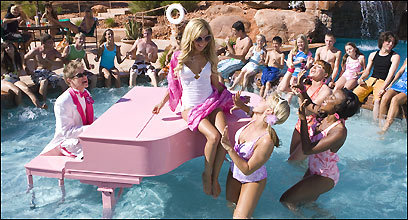 |
| if ryan can play piano in a pool then i demand a piano to be permanently placed in the gifted classroom |
I've been very aware that I can't exactly wheel a piano into the gifted room during workdays, so I've dedicated those periods to research. Only problem is, a lot of research has me itching to get a piano and try things out. So, I get frustrated. But I found a lot of information, so here goes.
No Hand Left Behind
It's pretty standard (and I don't plan on messing with this) that, when playing piano, melody goes with the right hand and harmony/accompaniment goes with the left hand. The Sort-of-Scientific reason for this is because your brain just has the tendency to hear the higher notes better and clearer, because acoustics or something.
Well, I've established a theme and a bit of a melody for my first song, which is about Hans (that will be up in a post soon!), and I am understandably playing that with my right hand. So I guess the left hand is just ... hanging out? Making shadows?
Pfft.
 |
| amazingly enough, i am currently researching left hand accompaniment. |
So lo and behold, what does my first source give me?

Then, another source essentially gave me chord progressions, which I had already toiled through. I mean, maybe I should have specified...?
Worry not, I got myself some Real Information soon enough at this website:
Basically, don't repeat the same thing over and over again (Alberti Bass or Waltz Rhythm etc.) or else your audience might kill themselves.
 |
| this, my friends, is Alberti Bass, also known as Too Classical For My Purposes |
(1) break the pattern up. So, insert a rest or something in between.
(2) only play part of it. The rest is irrelevant in order to preserve sanity.
(3) move it up or down an octave. That can also change the mood and overall atmosphere!
(4) change to a variation. Well, that brings us to variations, which I'm lazy to explain. Basically, change it, but still make it obvious what it is. Or not obvious. There are some crazy variations. Here's the website to a great variation on an entire song, as opposed to a pattern: https://galaxymusicnotes.com/products/twinkle-little-star-variations-advanced.
(5) literally just stop the pattern. Okay.
Other than those tips, there are some more tangible We-Need-A-Piano-In-The-Gifted-Room type of information that I wouldn't be able to explain well, but you'll be able to hear (hopefully soon!). Worry not, I now know a bit more about what I'm doing!
♭ ♮ ♯
See you on the other side of the war ~
Source(s):
Day, Holly. "Great Left-Hand Accompaniment Patterns for the Piano or Keyboard."Dummies. John Wiley and Sons, Inc., n.d. Web. 03 Mar. 2017.
Topham, Tim. "The Ultimate Guide to Left Hand Piano Styles & Patterns." Creative Music Education. Top Music Education PTY LTD, 21 Feb. 2017. Web. 03 Mar. 2017.
____________________________________________________________________________
Commented on Allison, Tucker, Jasmine, Amanda, and Olivia's blogs
____________________________________________________________________________
Commented on Allison, Tucker, Jasmine, Amanda, and Olivia's blogs